The Tarragona region, and especially the Terres de l’Ebre, is an area with a high incidence of forest fires, which affect its landscape and, consequently, the primary sector and its people. The province has a forest area of 49% and an agricultural area of 46%. The population, and especially young people, often grow up with little awareness of the landscape that surrounds them and are unaware of society’s responsibility in managing the landscape to reduce the risk of large forest fires.
In response to this reality, the project “Training for Primary School Teachers: Adapting to Forest Fires in the Context of Climate Change in the Province of Tarragona” has created a training program for teachers, providing them with tools and resources to address the topic of fires in the classroom and raise awareness among young children about the importance of having landscapes adapted for fire prevention. The project has been financed by the Tarragona Provincial Council, with a total of €18,754.68, through the 2024 call for subsidies for the development of projects for the protection and improvement of the environment.
“We have developed a training program for primary school teachers on landscape and forest fire management, adapted to the specific circumstances of the Tarragona province. This means we have focused on the types of forest fires in this area and on creating a mosaic landscape, which is linked to the importance of the primary sector in this territory. Therefore, we have emphasized the importance of agricultural production, key aspects for preventing large forest fires,” explains Carla Vilarasau, who is responsible for implementing the project.


Participatory process
The training program was developed through a participatory process with four schools: Lestonnac School, Tarragona School, San Rafael School (Selva del Camp), Dr. Ferran-ZER School (Corbera de Ebro), and Martí Poch School (L’Espluga de Francolí). In the first phase, we worked with the teachers to identify the tools, resources, and technical information needed to teach students about wildfires. We also asked them to consider the time they could dedicate to fieldwork in order to design a training program tailored to their specific context. Next, we engaged the students to understand their perceptions of wildfires and the mosaic landscape. They were also asked what types of classroom activities they would prefer to do to learn about this topic. In total, we worked with 20 teachers and 160 children, mostly in the 5th and 6th grades.
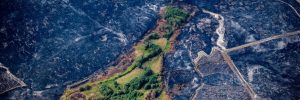
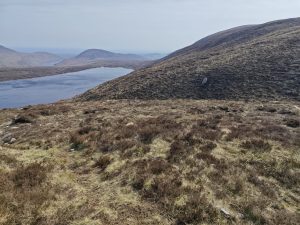
“For example, one of the tools we used with the students was to show them two images: one of a continuous burned landscape and another of a burned mosaic landscape. From there, we asked them where they would prefer to live, where they thought it would be easier to extinguish the fire, and where they could get local products. It’s important to start by analyzing what the students already know or think,” adds Martí Romaní, education and awareness technician at the Foundation.

Training materials
The teacher training program was designed based on information gathered from teachers and students, with guidance from the project’s Advisory Council. This Council, comprised of representatives from the teaching profession, firefighters, livestock farmers, and forestry professionals, was established to create a multidisciplinary team that would contribute diverse perspectives and expertise to enrich the technical and pedagogical aspects of the training.
Specifically, the project has developed a blended learning program, structured around an online theoretical component covering context and concepts; two sessions featuring experts on land management and forest fires, during which questions about the theoretical material are answered; a field trip to a mosaic landscape area with an expert; activity sheets for teachers to complete based on a learning scenario; and a presentation of these activity sheets to the group. This training requires a commitment of 15 hours of instruction, and the process for its accreditation by the Department of Education and Vocational Training is underway. It is from this point that it can be made available to interested teachers and schools.
Moreover, the project has produced an animated video”El paisatge mosaic: divers, viu, i més resistent al foc“.
“We hope that with this training, we can introduce the topic of forest fires and the mosaic landscape into the educational curriculum. It is essential that in the current context, aggravated by climate change, the youngest among us, who will be the future stewards of the land, have the awareness and knowledge necessary to contribute to sustainable landscape management. This is an issue that has significant implications for the socio-economic model we want as a society and for people’s safety,” concludes Carla Vilarasau.
This project was carried out with the collaboration of Diputació de Tarragona.