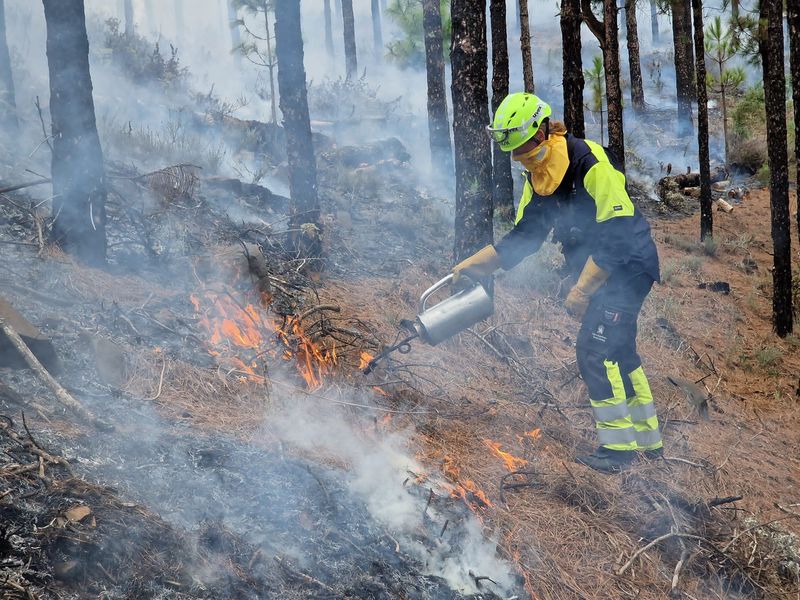
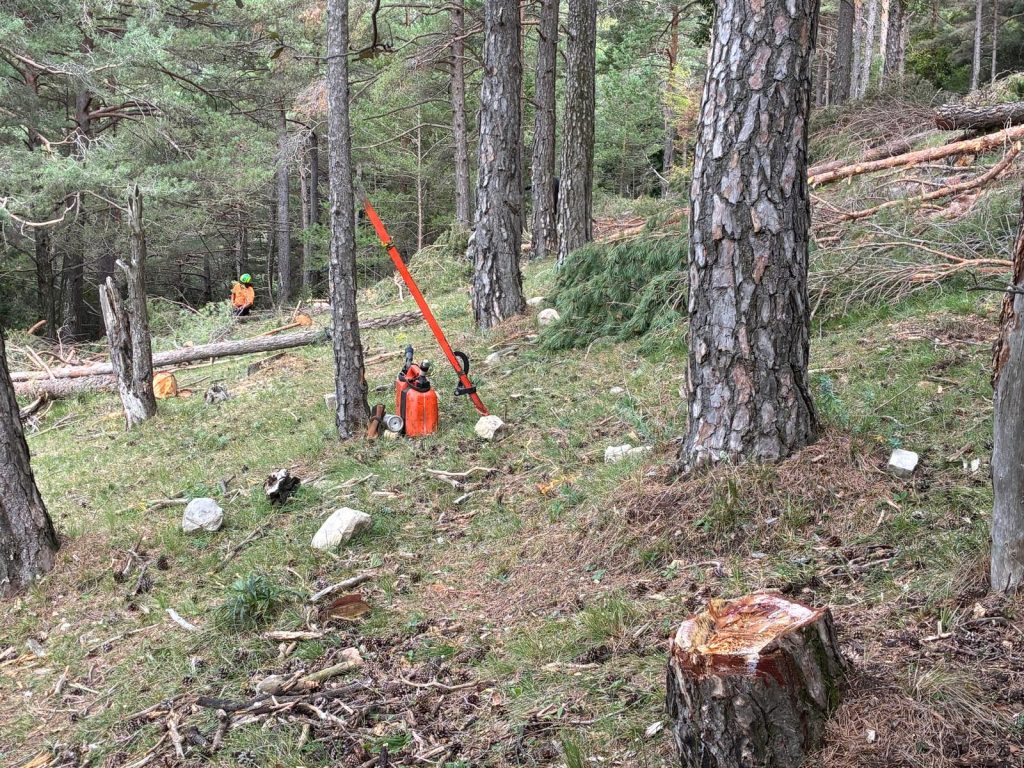
The intervention covers 6.32 hectares of Scots pine forest mixed with holm oak and downy oak. In some areas, small patches of dead pine trees or trees severely affected by drought will be removed first. The aim is to create an open, dehesa-like woodland, with more widely spaced trees and limited undergrowth. This corresponds to the type C structure defined by the Forest Management Guidelines (ORGEST): in the event of a wildfire, the fire remains on the ground and does not spread to the tree canopies.
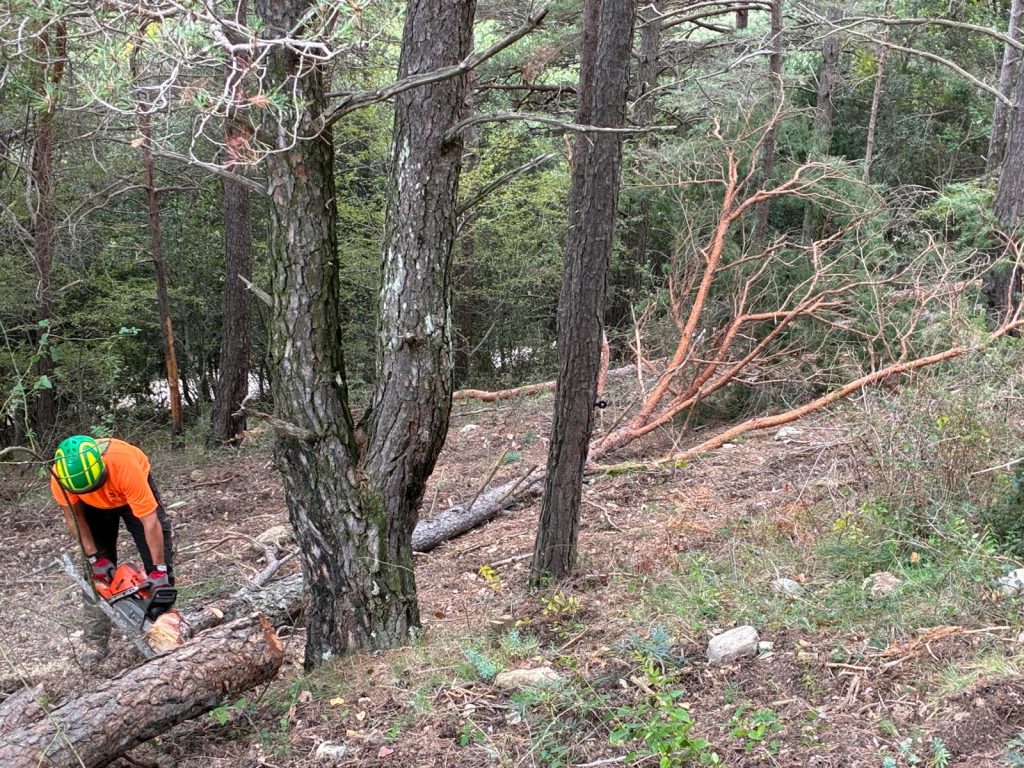
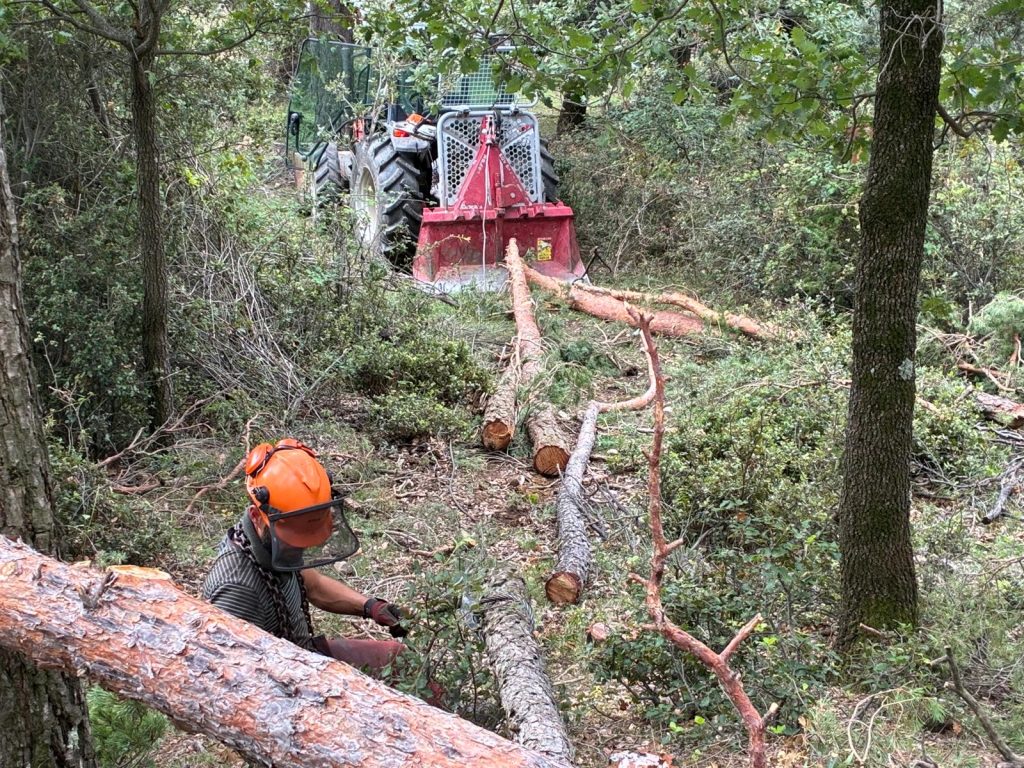
“To identify the areas for intervention, the project analysed the mountain range using three criteria: whether the area was located within a Strategic Management Point designated by the Fire and Rescue Service, whether it contained valuable open-habitat areas, and whether there was an active livestock farm nearby. Ten locations met all three requirements. Of these, the team selected two (Mas Espinau and Mas Quintana) because they also had a water point for firefighting operations and the farmer had specifically requested intervention. Once the work is completed, the herd will help keep the undergrowth low,” explains Ona Alay, project coordinator and technician at the Pau Costa Foundation.
Across the entire area, selective thinning of holm oaks and downy oaks will be carried out. Shrubs taller than 1.3 metres, which can act as a ladder for fire to reach the trees, will also be removed, reducing undergrowth cover to below 30%. Some scattered shrubs will be retained to support biodiversity, and no work will be carried out on slopes steeper than 60%.
Branches and other plant residues will be chipped as the work progresses to prevent the accumulation of dry biomass. The work will be carried out by a local forestry company (Bosequerols, SCCL), under the technical coordination of the Pau Costa Foundation and the Generalitat’s Territorial Forestry Services. The intervention will take place in autumn, outside the bird nesting season and the period of high wildfire risk, and is expected to last approximately two months.
A forest that will be maintained by a herd of Albera cattle
Mas Espinau has been used for livestock grazing since the 1990s, when farming activities were restored following a period of abandonment. Today, a herd of around 15 Albera cattle grazes on the estate. The animals belong to the organic livestock farm Ramaderia Ecològica ISCRA, run by the estate’s owner and farmer, Wolf Rosenow, who also keeps a small flock of Roussillon sheep.
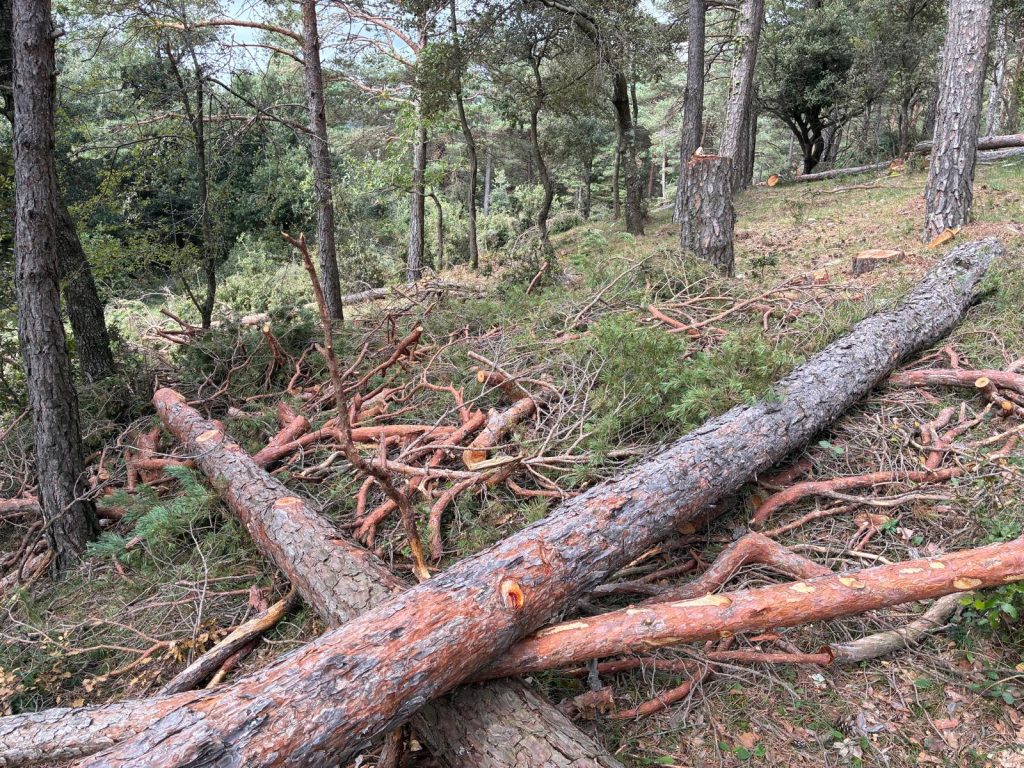
The Pau Costa Foundation will work with the farmer to develop a grazing management plan, which will include the use of virtual electric fencing and more intensive, rotational grazing periods. The aim is to prevent the forest from becoming overgrown again and to expand the area managed within the Strategic Management Point (PEG). It is worth noting that restoring open spaces also benefits biodiversity. Habitats such as jonceda (rush-dominated grasslands), as well as species associated with open landscapes, including the golden eagle, shrikes and several protected species of butterflies and bats, will benefit from these actions.
The project
The work at Mas Espinau is part of the project Improving open-habitat areas and forest management to promote livestock farming as a tool for enhancing ecosystem resilience in the Alta Garrotxa Protected Natural Area. The initiative is led by the Pau Costa Foundation and the Alta Garrotxa Consortium, through ADRINOC, within the framework of the European project LIFE eCOadapt50. LIFE eCOadapt50 is a climate change adaptation project led by the Barcelona Provincial Council, working across 19 areas of Catalonia. It is co-funded by the European Commission’s LIFE Programme and the Climate Fund of Catalonia.