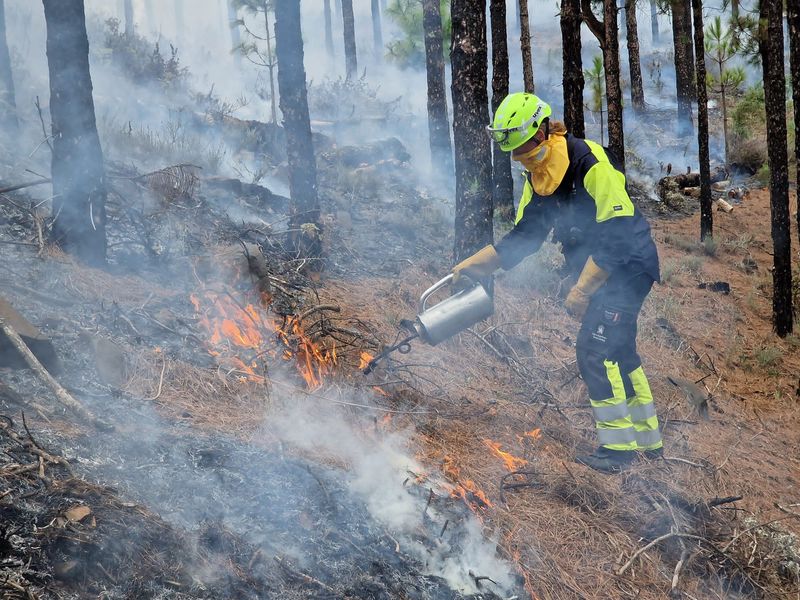
The RUMIAR project – Resilience against large forest fires in the Prades Mountains – comes to an end after two years of collaborative work aimed at addressing the increased risk of forest fires caused by climate change and rural abandonment.
Driven by the Diputació de Tarragona, together with BOSCAT, Concactiva, Forest Science and Technology Center of Catalonia (CTFC) and Pau Costa Foundation (PCF), the project had a budget of €2.1 million, funded by the European Union’s NextGenerationEU fund.
An agroforestry mosaic to reduce the risk of large forest fires
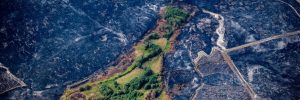
The project has helped improve the presence of the agroforestry mosaic in the Prades Mountains, consisting of managed forests, croplands, and pastures that break the continuity of forest fuel and hinder the spread of fire.
In total, more than 500 hectares have been managed, spread across 11 strategic areas for wildfire prevention in the Prades Mountains. The actions combined mechanical work and silvopasture, with the essential support of shepherds who joined the Ramats de Foc project and, with their flocks, ensure the long-term maintenance of these strategic areas.

Impact of the RUMIAR project
The impact of the RUMIAR project has been visible in the environmental, social, and economic spheres of the territory:
Reduction of the risk of large wild fires, thanks to the creation of a mosaic landscape that breaks the continuity of fire.
- Improvement of biodiversity, with open and diverse spaces that favor habitats for sensitive species, such as birds of prey and other species typical of Mediterranean ecosystems.
- Activation of the local bioeconomy, through the valorization of high-quality forest products such as honey and truffles, and the stimulation of the livestock sector, highlighting food products such as the meat and dairy they produce.
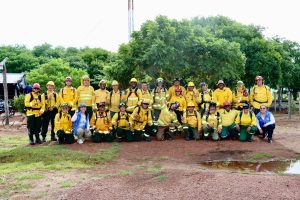
- Promotion of employment and professionalization in the forestry sector, with the dual training of eight young forest workers, who have been trained and hired for forest management and maintenance tasks.
- Strengthening of the social fabric and shared knowledge through technical workshops, sectoral meetings, and continuous training among landowners, shepherds, and technicians.
- Cross-cutting incorporation of the gender perspective, with a prominent role for female technicians, shepherds, and producers in leading key initiatives for rural development.
Project conclusions
The RUMIAR project demonstrates that active forest management is a key tool for managing the risk of large wild fires and that it is only effective when it integrates the territory, the people, and economic activity.
The main conclusions of the project are:
- The combination of forest management, agriculture, and extensive livestock farming is essential for building landscapes resilient to climate change.
- Silvopasture is an efficient, sustainable, and viable tool for the long-term maintenance of strategic fire prevention areas.
- Public-private collaboration is essential in territories with a high percentage of private ownership.
- Wildfire risk managementcan become an opportunity for rural development, generating employment, retaining population, and strengthening the local bioeconomy.
- Training, knowledge transfer, and a gender perspective are key elements to ensure the continuity and impact of forest management projects.
With the completion of RUMIAR, the Prades Mountains now have a replicable landscape management model that enhances safety against large forest fires, protects biodiversity, and safeguards the future of the territory.
RUMIAR is supported by the Biodiversity Foundation of the Ministry for the Ecological Transition and the Demographic Challenge (MITECO) within the framework of the Recovery, Transformation, and Resilience Plan (PRTR), funded by the European Union – NextGenerationEU.