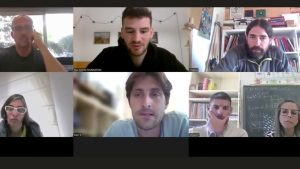
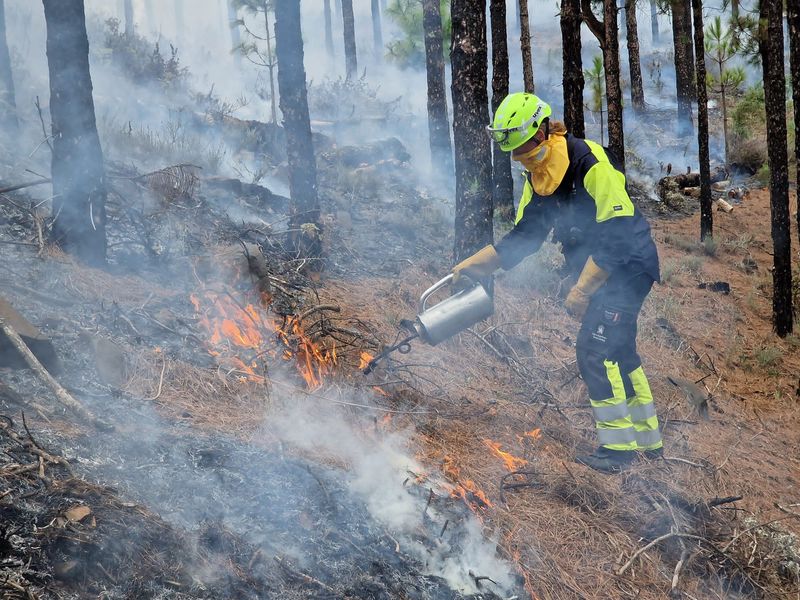
The MedFireWise project (Cross-Med Wildfire Resilience: Harnessing Nature-Based Solutions for Wildfire Risk Mitigation) kicked off on 19 June. MedFireWise seeks to improve the resilience of ecosystems and reduce the intensity of wildfires, promoting sustainable forest management, increasing public awareness and improving tools for risk prediction and management. It is funded by the Interreg NEXT MED programme and will last for three years.
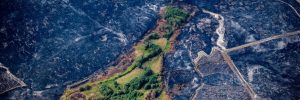
The severity of wildfires is increasing in the Mediterranean. These wildfires, intensified by climate change and driven by both natural factors and human activities, pose severe risks to ecosystems, human health, and regional economies. In response, MedFireWise promotes the use of Nature-based Solutions (NbS), specifically prescribed burns and silvopasture, to manage wildfire risk more sustainably. By fostering transnational collaboration, the project aims to share knowledge, build capacity, and develop innovative tools and strategies that enhance the resilience of vulnerable landscapes and communities across seven Mediterranean countries: Greece, Spain, Italy, Turkey, Tunisia, Algeria and Lebanon.
‘MedFireWise responds to the urgent need to better manage the risk of wildfires in Mediterranean ecosystems, and to the lack of tools, frameworks and practical knowledge to adapt to different contexts’, adds Helena Ballart, head of the PCF’s Resilient Landscapes and Societies Area.
MedFireWise will deliver a set of tools and actions to tackle wildfire risk in the Mediterranean, targeted at local communities, emergency teams, policy-makers, environmental managers and shepherds. The project will begin by assessing regional needs, legal frameworks, and existing nature-based practices, leading to the development of a wildfire risk prediction tool and a framework for selecting strategic intervention areas. On the ground, it will implement prescribed burns and silvopasture in key pilot regions through coordinated cross-campaigns. At the same time, it will raise awareness in wildfire-prone communities and work to transfer its solutions beyond the project’s borders, ensuring long-term impact through international collaboration, policy engagement, and capacity building.
The MedFireWise project is coordinated by the National Observatory of Athens (NOA), a leading institution in disaster monitoring and Earth observation. It brings together a consortium of partners from seven Mediterranean countries: NOA (Greece), the Foundation (Spain), D.R.E.AM. ITALIA (Italy), the Edirne Forest Management Directorate (Turkey), the National Research Institute for Rural Engineering, Water, and Forestry (Tunisia), the Algerian Space Agency (Algeria), and the University of Balamand (Lebanon). The consortium combines expertise in wildfire science, environmental management, and community engagement.
The Foundation leads the pilot in Catalonia, for which it will collaborate with shepherds, land managers and fire services to integrate the project into the territory, always hand in hand with the competent administration and seeking synergies with other existing projects.
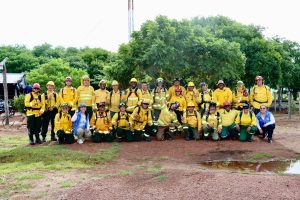
‘In the short term, we will carry out pilot actions of silvopasture and prescribed burning in strategic fire management areas, validate methodologies, collect data to evaluate results and strengthen our collaboration with local and technical actors,’ adds Ballart.
By combining science, local knowledge, and nature-based practices, MedFireWise has the potential to redefine how wildfire risk is managed across the Mediterranean. Its transnational approach ensures that lessons learned in one region can benefit others, while its emphasis on community involvement and policy integration strengthens long-term resilience. From empowering first responders and land managers to restoring ecosystems and supporting rural livelihoods, MedFireWise aims to leave a lasting legacy: safer landscapes, stronger communities, and a more climate-resilient Mediterranean.