After three years of intensive collaboration at the European level, the Horizon Europe project Firelogue has officially come to an end. Firelogue was a Coordination and Support Action (CSA) funded by the European Union under the European Green Deal call, with the objective of strengthening cooperation, coherence and impact across EU-funded research and innovation initiatives on WildFire Risk Management (WFRM). The project brought together knowledge from a large portfolio of ongoing and completed EU projects to support a more integrated, science-informed and policy-relevant approach to wildfire risk in Europe.
“Firelogue had a unique and strategic role: it was not another wildfire project, but a space to connect and make sense of the unprecedented investment Europe has made in wildfire research and innovation,” explains Núria Prat, head of Knowledge and Applied Science at PCF.
Wildfire risk in Europe is increasing in scale, complexity and social impact, driven by climate and land-use changes and growing exposure of people and assets. At the same time, Europe has invested heavily in research, innovation and demonstration projects addressing different dimensions of wildfire risk. However, this knowledge has often remained fragmented across disciplines, sectors and governance levels. Firelogue was designed to bridge this gap by creating structured dialogue among projects, synthesising results, and translating them into coherent guidance for practitioners and policy-makers, with a strong emphasis on integrated WFRM.
“Altogether, the projects mobilised more than €80 million in funding — the largest investment in wildfire R&I in Europe’s history. Firelogue’s mission was to ensure that this collective effort truly added up to more than the sum of its parts,” says Núria.
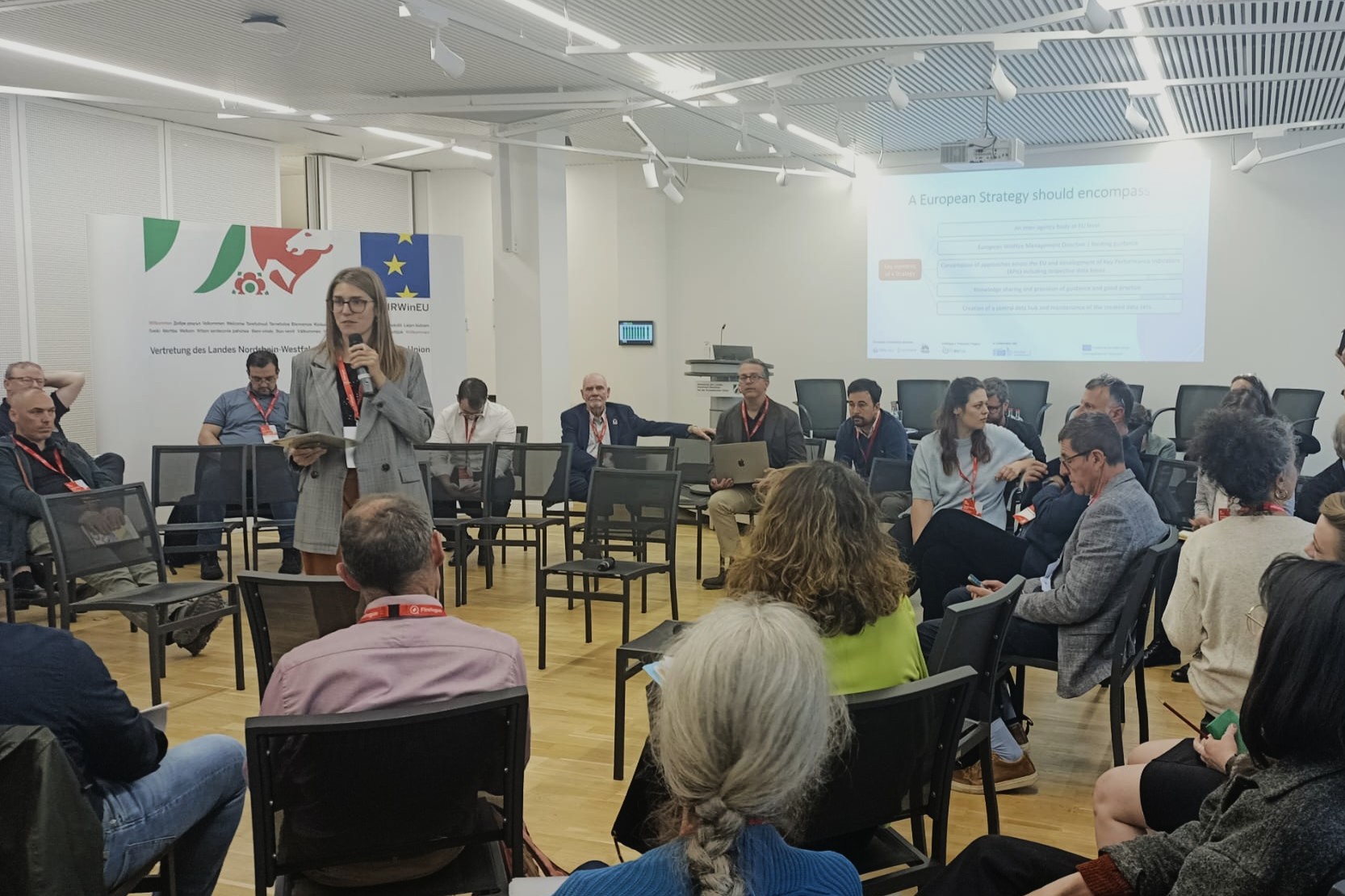
Over its lifetime, Firelogue delivered a wide range of outputs, including:
- The Integrated Wildfire Risk Management Strategy for the EU (see executive summary in English and Spanish).
- The consolidation and enhancement of the knowledge platform ‘Lessons on Fire – Powered by Firelogue’.
- Analysis of WFRM aspects at the European level (i.e. governance, policies, justice, wildfire trends), co-created with key European projects.
- A publication portfolio that translates research and stakeholder dialogue into actionable wildfire management knowledge. It includes a key study led by Eduard Plana (Forest Science and Technology Centre of Catalonia): Framing coherence across EU policies towards integrated WFRM and Nature-Based Solutions.
- 5 transversal working groups to address cross-cutting wildfire risk issues.
“One of Firelogue’s strengths was its ability to combine technical, scientific and societal perspectives, and to turn dialogue into concrete, usable outputs,” highlights Núria.
Firelogue was coordinated by the Fraunhofer Institute for Technological Trend Analysis ITN, a leading research organisation. The project was implemented by a multidisciplinary consortium of partners from across Europe, bringing together expertise in wildfire science, innovation, policy analysis and stakeholder engagement.
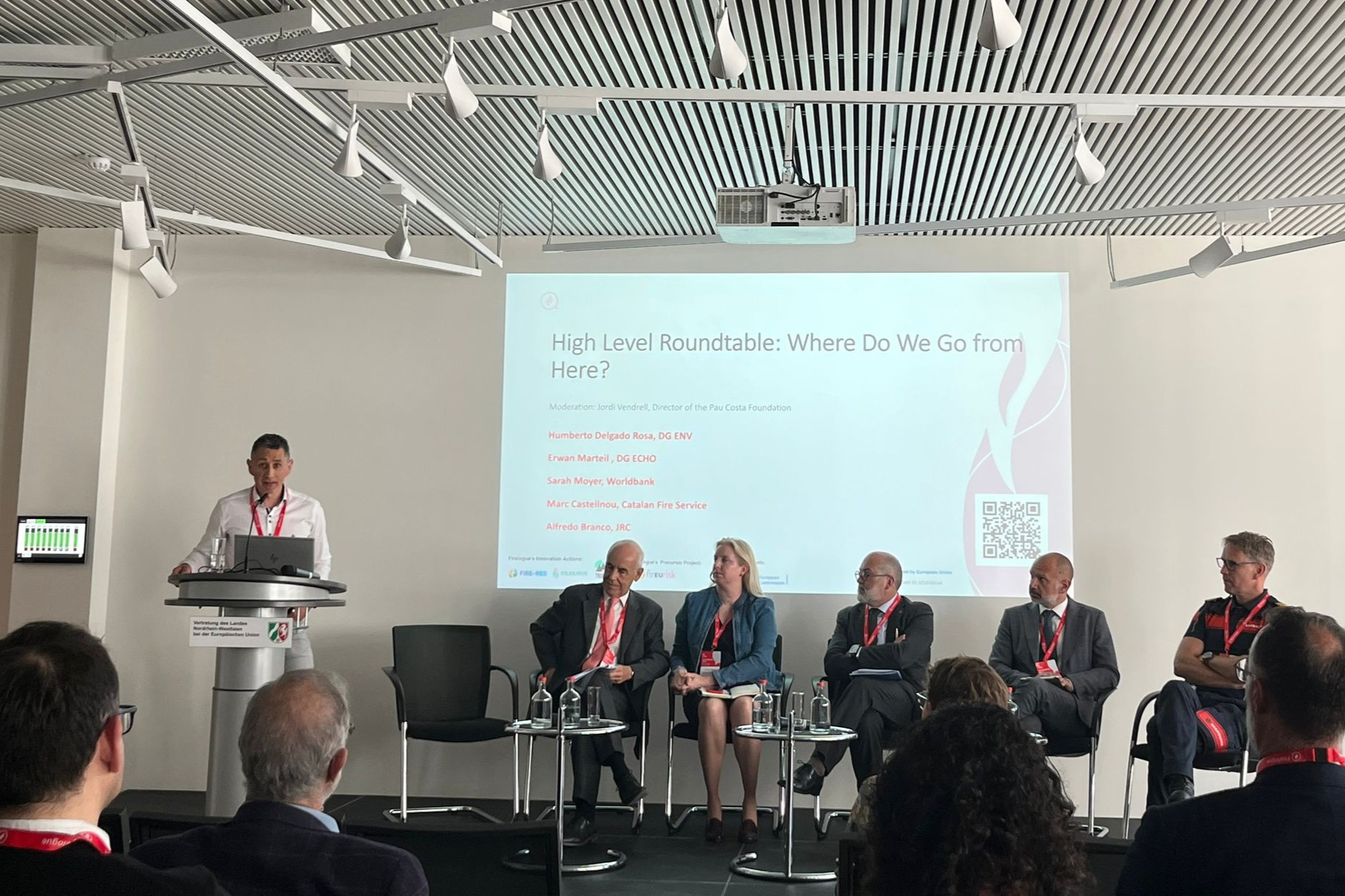
Within Firelogue, PCF played a key role in strengthening stakeholder engagement, policy dialogue and impact. The Foundation analysed how wildfire research and innovation projects engaged with different stakeholder groups — from the fire and civil protection communities to environmental actors and society — and proposed actions to enhance their relevance and uptake. PCF also supported advocacy and dialogue with decision-makers, engaging with several Directorates-General of the European Commission and national ministries to promote integrated WFRM approaches across Europe.
A flagship contribution has been PCF’s involvement in the ‘Lessons on Fire – powered by Firelogue’ platform, an open, participatory knowledge hub on wildfire risk. Following the end of the project, PCF will continue to manage and curate the platform, ensuring its long-term value for the fire community.
“Our role was to ensure that knowledge reached the right stakeholders and informed decision-making at different levels,” says Núria Prat.
As Firelogue concludes, its legacy lies in the shared understanding, networks and strategic guidance it has helped to build at the European level. The project’s outcomes strongly align with the European Commission’s ongoing shift towards more holistic and preventive approaches to wildfire risk. For the Pau Costa Foundation, Firelogue has reinforced the importance of coordination, dialogue and long-term knowledge stewardship. Looking ahead, PCF will continue to build on Firelogue’s results — particularly enhancing the multi-actor dialogue across Europe and scaling needs bottom-up, and through the Lessons on Fire platform — to support more resilient landscapes and safer communities in a fire-prone Europe.